Densitron makes the case for optical bonding in broadcast displays

25 November 2026 · Independent analysis by the IDE editorial team
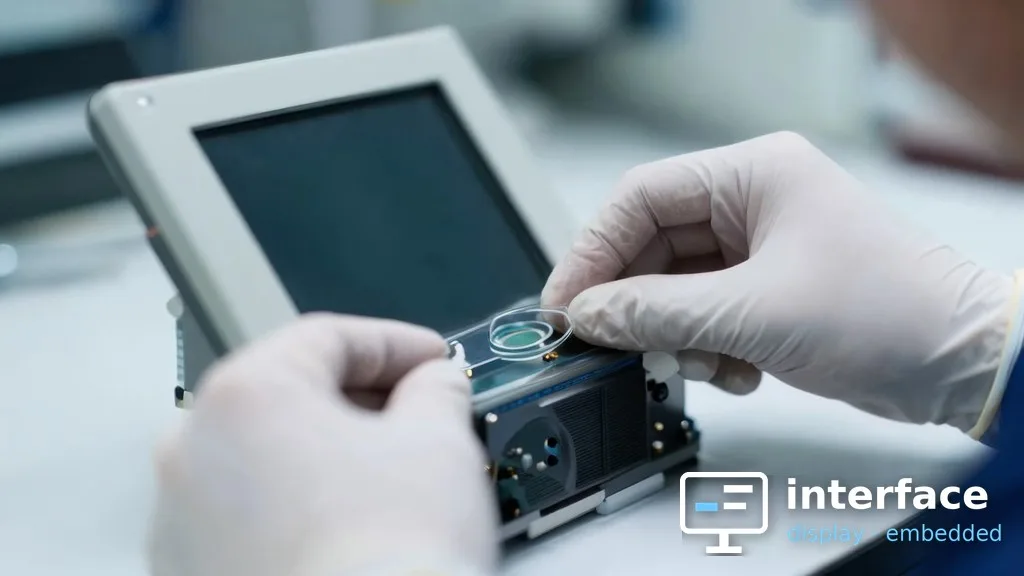
Gloved hands placing a clear glass cover lens onto a small display panel on a lab workbench
Interface, Display & Embedded

Optical bonding, already common in automotive and medical displays, could also benefit broadcast equipment, according to an article by Luo Luo, Global Product Manager – TFT at Densitron, published on RS Components' DesignSpark platform. The article carries no publication date.

Optical bonding laminates a touchscreen or cover lens onto a display using an optically clear layer, filling the air gap between the two. Densitron explains that removing this gap means fewer internal surfaces reflect light, which the company says reduces reflection losses and raises the contrast ratio. It links this to the growing role of HDR imaging in production and broadcast.

Claimed benefits: readability, sealing and strength

According to Densitron, an air gap can produce light reflection of up to 8 percent, causing wash-out in bright conditions. The company argues that bonding helps displays used in brightly lit studios and at outdoor sports and music broadcasts. It also says eliminating the gap reduces a parallax-like effect in which pixels appear to shift with the viewer's position, which users often perceive as a wider viewing angle, relevant in control rooms and on-air video walls.

Densitron adds that a growing number of manufacturers ask it to bond cover lenses purely for protection, to keep dust, grime and moisture from entering between lens and display. The company says that in its own internal tests, bonded displays showed no operational change after heat and humidity cycling, unlike unbonded displays. It further claims bonding increases impact and shock resistance, and states that some customers ran their own durability tests in which bonded displays passed. Neither the internal nor the customer test results, conditions or standards are detailed in the article.

Material choice and a delamination case

The article lists three material families: optically clear adhesives (OCAs), as used in smartphones and tablets; optically clear resins (OCRs), as used in point-of-sale terminals, ATMs, touch monitors and satnav systems; and optically clear gels, as used with small TFT and PMOLED displays in wearables and broadcast monitoring equipment. According to Densitron, the right material and process depend on the overlay substrate, the display type, whether the bond must be reworkable and the main reason for bonding.

Densitron describes a US customer whose product had to run continuously in high heat and humidity. The initial set-up combined a flush-mount cover lens, an IP-rated gasket and a bonded sunlight-readable display. Early tests went well, but over time delamination appeared between the cover lens and the bonding layer. According to Densitron's account, the customer concluded the problem stemmed from its end product, and Densitron writes that thermal expansion of components under these conditions had not been accounted for. The customer then looked at alternative materials, while Densitron says it adapted its bonding process to meet the new requirements.

What it means for OEMs

For design engineers specifying displays for broadcast or other harsh-environment equipment, the article frames bonding as a choice between several material systems rather than a single technique, with reworkability named as one of the selection criteria. Densitron's own case example shows that problems such as delamination did not appear in initial testing but only emerged over time under heat and humidity.

The performance and durability benefits described are vendor claims. Densitron and its customers report favourable test outcomes, but the article does not publish the underlying data.

Source DesignSpark (RS Components)

The illustration was generated with AI and is not a photograph of the product or event. How we work.

More news for design engineers