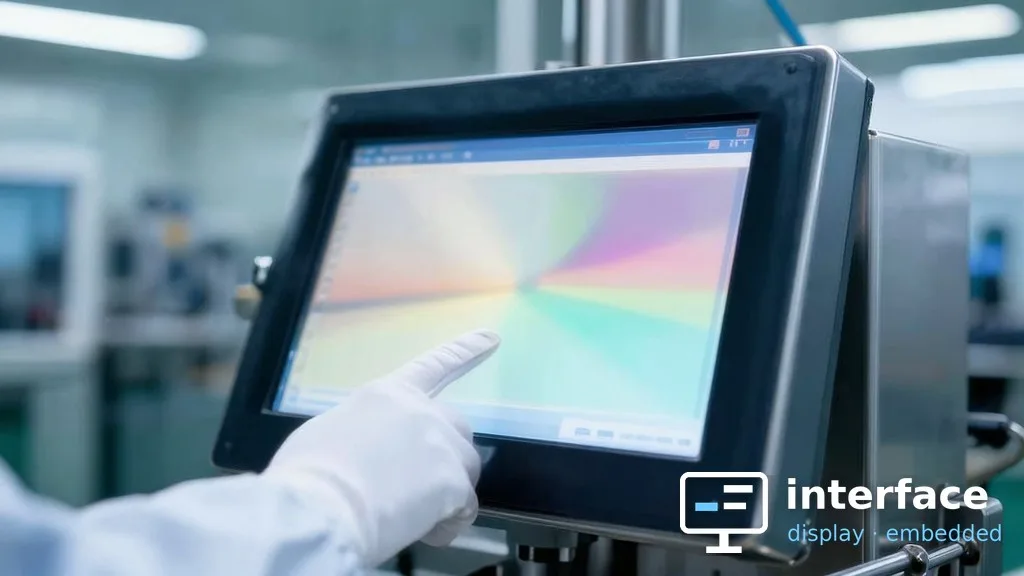
Stubbs notes that capacitive multi-touch makes familiar actions such as pinch-to-zoom and swiping possible. On a machine, he says, these gestures let operators zoom into a line overview to trace where a fault starts. They can also scroll across one large plant graphic instead of paging through several screens, or browse a manual opened on the panel.
He also points to a safety-related use. A panel can require a second finger on a dedicated screen zone before its other buttons respond. According to Stubbs, this two-hand approach cuts unintended activations caused by bumps, insects on outdoor units or visitors pointing at the screen.
Touchless gestures, picked up by a camera on the front of the display, could matter in cleanrooms and other contamination-sensitive areas, he writes. Less physical contact means the panel needs cleaning less often and wears less.
Edge-to-edge displays have little or no dead border. This gives a smaller panel the usable area of a larger one, or puts more screen into the same bezel size. Stubbs presents haptic feedback, a brief vibration or bump when a virtual button registers, as especially useful in loud areas where an audible click goes unnoticed. He expects future haptics to let users tell virtual switches, valves and even textures apart by feel.