KEBA describes force feedback touch to let operators use HMIs without looking

25 November 2026 · Independent analysis by the IDE editorial team

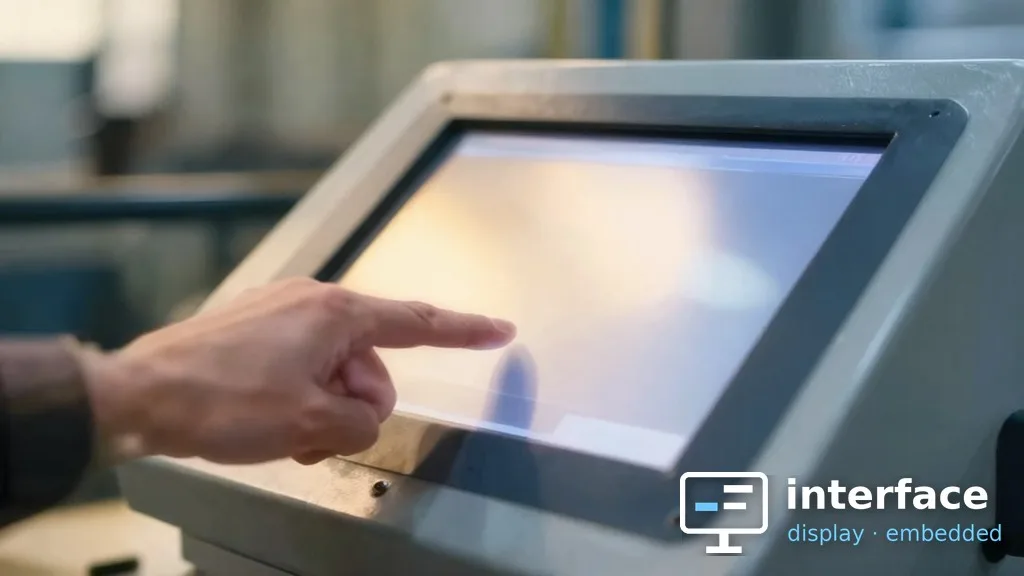
Close-up of a fingertip pressing an industrial touchscreen on a control console in a factory
Interface, Display & Embedded

KEBA has published an article on its own website outlining a force feedback touch technology for industrial human-machine interfaces. The company positions it as a way to swap physical push buttons for software keys on a touchscreen without giving up the ability to operate by feel.

According to KEBA, the key difference from a standard touchscreen is that resting a finger on an on-screen key does nothing. A function only fires once the operator presses with enough force, and a short vibration then confirms the input, comparable to the click of a mechanical button.

On certification, KEBA states that the force feedback touch complies with CE, UL and UKCA. For motion triggering, the company says the system received an EC type examination certificate and conforms to PL b / Category B under EN ISO 13849-1. The article does not give a publication date, pricing or availability details.

Why KEBA says standard touchscreens fall short

KEBA argues that conventional touch front ends lack the tactile cues of hardware controls. In its view, this leads to more operating errors, because operators often keep their eyes on the process rather than on the screen.

The company describes two failure modes. If a finger slides off an on-screen key while the operator is watching the equipment, the intended function is not carried out. In a worse case, a neighbouring key is hit and an unintended function runs. KEBA adds that ordinary front surfaces cannot sense how hard they are pressed, so they cannot hold back a command until a defined force is reached.

Software keys and a single hardware platform

KEBA lists three reasons to move from physical to software buttons: new or changed functions can be added through a software update instead of extra switches, keys that are not in use can simply be hidden, and the visual design can be refreshed with little effort.

The company also points to its real-time widget technology, which it says lets touch applications run in real time by pairing a CPU with an additional microcontroller. KEBA claims this gives the fastest possible transmission times; the article provides no latency figures.

As an application example, KEBA mentions its Machine Control Panel (MCP). According to the company, it shows a virtual version of a given operator console on a multitouch display, so one standardised hardware unit can cover many configurations. KEBA says the industry currently uses a mix of approaches depending on system type, size and production volume, and sees a shift towards on-screen keys in modern machine tools in particular.

What it means for OEMs

For machine builders with many variants and options, the main argument KEBA makes is consolidation. Each option traditionally needs its own physical key and console space, and replacement parts must match the exact console variant, which brings logistics and storage costs. A single display-based unit could reduce the number of distinct parts to design in, stock and service, if it fits the application.

The safety claims need careful checking during design-in. OEMs should obtain the EC type examination certificate and confirm that the stated PL b / Category B rating for motion triggering matches the required performance level from their own risk assessment. Whether other safety functions on a given system can also be moved to the touchscreen is not addressed in the article.

KEBA's statements that the technology guarantees reliable and safe operation, and its speed claims for the real-time widget, are vendor claims. Engineers will want test data, operator trials with gloves or in harsh conditions, and clarity on lead times and long-term availability before committing a platform to it.

Source KEBA

The illustration was generated with AI and is not a photograph of the product or event. How we work.

More news for design engineers